


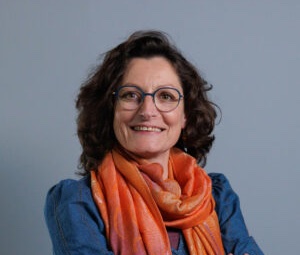
Photo provided by Ogbonnaya Goodluck and used with permission.
The Igbo language is spoken by approximately 31 million people, mainly in the southeastern part of Nigeria, where it has national language status. Although there is debate about whether Igbo is an endangered language, it can be considered vulnerable. Compared to many other languages of similar size, the amount of digital content available in Igbo is much smaller than its number of regional speakers would suggest.
Members of the Global Voices in Igbo project have been working to change that, while also improving and developing their own skills translating into their native language. Started in 2019, the site has been experiencing a revival under the leadership of co-managers, Chinwendu Peace and Lucy Iwuala, who have been supporting this team. In September 2026 alone, the team published 18 translations, and so far in October, there have been 21 translations and counting.
Here on the GV Community Blog, we introduce some of the translators working to make Igbo more visible online.
Ogbonnaya Goodluck is a chemistry teacher in Awka, Anambra and has been a member of the team since 2026.
Global Voices (GV): How did you start translating into Igbo?
Ogbonnaya Goodluck (OG): My love for languages has pushed me into currently learning two additional languages – French and Chinese. But besides that, I love promoting my own native language – the Igbo language by reading and writing things in the language as much as I could. Thanks to a friend who told me about the Wikipedia platform in 2023, I've been creating, translating, and publishing articles for people to read. Fast forward to 2025, I learnt about the Global Voices platform – another avenue to express my passion for the Igbo language and so I didn't delay a second in hopping in. I officially started publishing articles on Global Voices in 2026. During all this time, it has been nothing but exceptionally exciting.
GV: What motivates you to translate, and why does it matter to you that others can get news and information in Igbo?
OG: First, it comes from within – it’s a passion thing, I feel so comfortable and happy doing it. Secondly, it is fueled by anger. Anger when I see articles by others who intentionally or carelessly murder the Igbo language in the name of translation. I am left with no options other than continuing, with the hope that soon and very soon, I'll be able to completely correct those wrongs of others, with the help of other good translators too.
GV: What are the biggest challenges in translating into Igbo, and how do you handle them?
OG: First, financing. How? Most opportunities that come when it concerns translating into Igbo are always on a voluntary basis, and the few that pay, the pay is always little, and so one is left with survival first, before talking about translation. On the other hand, translations are always done online, and no thanks to the economy in which internet data is a luxury. One has to hustle so much, just to afford data that can last. At the end, these factors leave one with very little time to carry on translations.
Second, the right hands. There are many Igbo people and many Igbo speakers, yet very very few Igbo translators. So most of the time, the workload is much, and sometimes it becomes boring, because there are only few people who can join in doing it and doing it well.
The minor challenges are network connectivity and power. Sometimes you are ready to translate but the network will be terrible, forcing you to lose interest at that time, leading to delays. Also, electricity supply is something else. Sometimes for days, there'll be no energy to power your devices.
How do I handle these challenges? I work, but yet I still try to make time for translations, even at midnight if need be. And when money comes, I spend a good amount on data that will last for a reasonable period of time. As for getting the right hands, I am very selective in telling people about translation. I invite those who I know are capable and good. But then, the question they will always throw at you most times is, “what will I gain or benefit?”, and sometimes you're left with nothing to answer.
GV: What advice would you give someone starting to translate into African languages?
OG: For any person translating into any African language, one should be intentional about it. Have it in mind that you're speaking to someone through translations. So don't translate word-for-word, but translate to make meaning. Translate exactly the way you will say it if you were saying it by mouth.
GV: What would help translators of Igbo and other African languages feel more connected and supported?
OG: Making the vocation enticing will make Igbo and other African language translators feel more connected and supported. Many well-to-do Igbo people and other global foundations should financially support these language promoting platforms like Global Voices and the Wikimedia Foundation, so they can have enough financing to sponsor these translators. People will come out to become full time translators, if they know that they can earn a good living from doing only the job.



1 comment
Nice to meet you! Welcome to Global Voices and thanks for all your efforts with the Igbo language.